
CARE CONVENTION NETWORK UGANDA PARTNERSHIP APPROACH
Care Convention Network seeks to establish long-term partnerships with visionary organizations across Uganda that are committed to building the nation's culture of giving. Our team uses our Visionary Criteria to identify new partners, and we use our Active Partnership Model to support them while they are in our network. Our goal is to see our partner organizations become stronger, healthier organizations, increase their social impact, and be in a position to sustain their efforts long after Uganda Cares Convention Network support ceases
HOW WE FIND PARTNERS
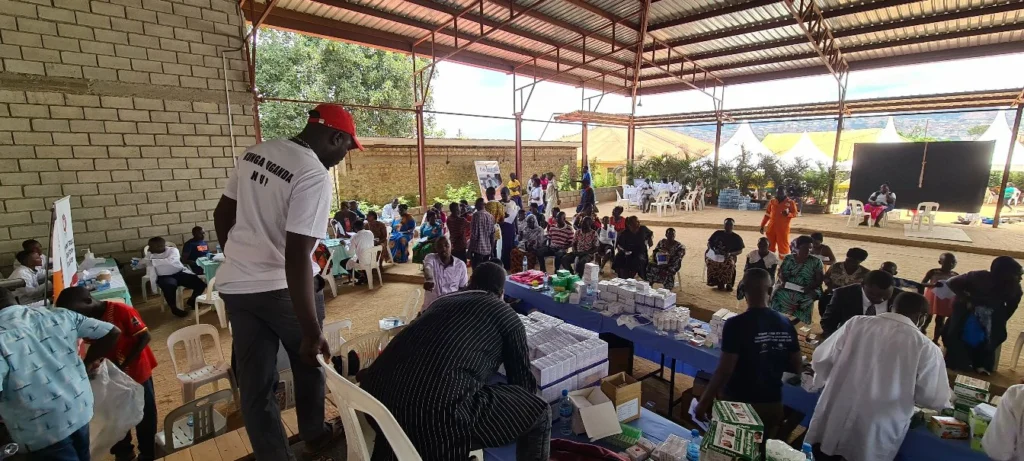
Care Convention Network employs a community-driven, participatory partnership approach that engages local references and experts in sourcing and screening partners. We are highly networked in the communities related to civil society and social entrepreneurs across all 135 districts of Uganda. Our sources include
- Current partners or Community Heroes Circle partners with a high degree of trust – Our most valuable source of new partner identification comes from organizations already within our network who can vouch for emerging organizations demonstrating exceptional commitment and impact in their communities.
- District Governors and Local Organizing Committees – Our decentralized structure across all districts provides grassroots intelligence about effective community-based organizations that may not yet have national visibility but demonstrate strong local impact and growth potential
- Uganda Cares Annual Convention participants – Organizations that participate in our seven-day Charity Week and Festival demonstrate their commitment to collaborative action and provide opportunities for our team to observe their work firsthand, assess organizational culture, and evaluate alignment with our values.
- Communities of Practice members – Practitioners working in health philanthropy, education funding, environmental giving, corporate social responsibility, community foundations, faith-based philanthropy, and youth-led initiatives often identify emerging organizations within their sectors that would benefit from Uganda Cares support.
- Local NGO consortiums and community platforms – We maintain active relationships with district-level NGO forums, community development associations, and civil society platforms that bring together organizations working on shared priorities.
- Reputable fellowship and peer networks – We connect with organizations participating in leadership development programs, social entrepreneurship initiatives, and capacity building networks operating in Uganda, including those affiliated with East Africa Philanthropy Network.
- Well-established civil society and NGO contacts – Long-standing relationships with major Ugandan NGOs, international organizations operating in Uganda, and community-based organization networks provide referrals to emerging organizations demonstrating strong potential.
- Peer funders and their incubator programs – Corporate social responsibility departments, private foundations operating in Uganda, international development organizations, and government grant programs often identify organizations that have completed their support cycles and are ready for next-stage partnership.
- Faith-based organization networks – Given Uganda Cares’ Christ-centered values and our commitment to working across all faith traditions, we maintain strong relationships with Islamic organizations (like IUIU), Catholic social services networks, Protestant development agencies, and interfaith platforms that can identify effective community-based initiatives.
- Uganda Cares Philanthropy Academy alumni – Organizations that participate in our training programs demonstrate commitment to learning and organizational development, making them strong candidates for deeper partnership when they reach appropriate maturity stage.
- Corporate partners and their community initiatives – Our corporate sponsors often work with grassroots organizations in their supply chains, employee volunteer programs, or community investment initiatives and can identify effective local organizations ready for capacity building support.
- University and research institution partnerships – Academic institutions like IUIU Female Campus, Makerere University, and others conducting community engagement work often identify student-led or faculty-supported initiatives demonstrating innovation and impact potential.
- Media partners and communications networks – Journalists covering development issues, social media influencers focused on community development, and communications professionals often identify inspiring stories of grassroots organizations worthy of support and platform visibility.
- Government ministry contacts at district and national levels – Relationships with Ministry of Gender, Labor and Social Development, Ministry of Health, Ministry of Education, and National Environment Management Authority provide referrals to community organizations delivering effective services in alignment with national priorities.
- Tunga Marketing verification data – Our partnership with Tunga Marketing’s three-channel integrated system sometimes reveals high-performing organizations through their engagement patterns, program documentation quality, and community reception of their work.